

When using the Robot Operating System (ROS), it’s fairly common to want to shut down a launched system if a specific node (or set of nodes) exits. This is pretty easy in ROS1, because launch files support the required attribute on each node. As a result, crafting a two-node system where one of the nodes

A subjective review and some takeaways of our teams trip to FOSDEM 2019.

During February 2019 we celebrated another fine Plasma release with our friends at KDE by showcasing a month of KDE snaps on the Snapcraft Twitter and other social accounts. The KDE developers have done amazing work to create an SDK that simplifies making snaps of KDE applications and they also publish a common KDE framework

Canonical will be attending Nvidia’s GTC Conference in San Jose, California March 18 – 21, 2019.

As 14.04 reaches the end of its five-year, Standard Security Maintenance, LTS window in April 2019, support for the OS is transitioning into a new phase – Extended Security Maintenance (ESM).

Data backups are arguably the most important part of one’s software setup. While many scenarios fall into the realm of if, data loss belongs in the when domain. Over time, every one of us will experience some kind of hardware failure, be it an optical disk, a hard disk or a lost phone. It is

At the end of last year, we shared an infographic highlighting the adoption of snaps by users for their desktop, server or IoT devices. Those snaps wouldn’t be available without the growing number of developers building them behind the scenes. But why have developers, including those from some of the world’s largest software companies, de

Kubernetes, the flexible software that coordinates containers, runs on a range of platforms, from public to private cloud, data centers, bare metal and virtualised infrastructure, and requires a number of considerations for design and performance optimisation. Beyond identifying individual requirements, such as use cases and topology, org

Newsletter signup

The advent of virtualisation has significantly changed the way we use IT infrastructure. In theory, the ability to share single server resources to run multiple isolated operating systems provides flexibility and promises easy operations. However, in practice, managing virtualised infrastructure can be quite expensive and complex as a res
The snapcraft CLI has supported building ROS1 snaps for a while via the catkin plugin. We supported the ROS2 betas via the ament plugin, but that was before Open Robotics had a ROS2 package repository setup, which meant that the ament plugin built the ROS2 underlay from source, and it was predictably dreadfully slow. However,

February 28, 2019 – Canonical today announced support for containerd in its 1.14 releases of Charmed Kubernetes and Microk8s, improving security and robustness. “Containerd has become the industry-standard container runtime focused on simplicity, robustness and portability.” said Carmine Rimi, product manager for Kubernetes at Canonical.

A reliable data backup plan should be an integral part of everyone’s software arsenal. If you accidentally delete your files, or something goes wrong in your setup, you will have your data safely stored in another location. This will allow you to recover quickly and resume working. Likewise, if you suffer a hardware failure or
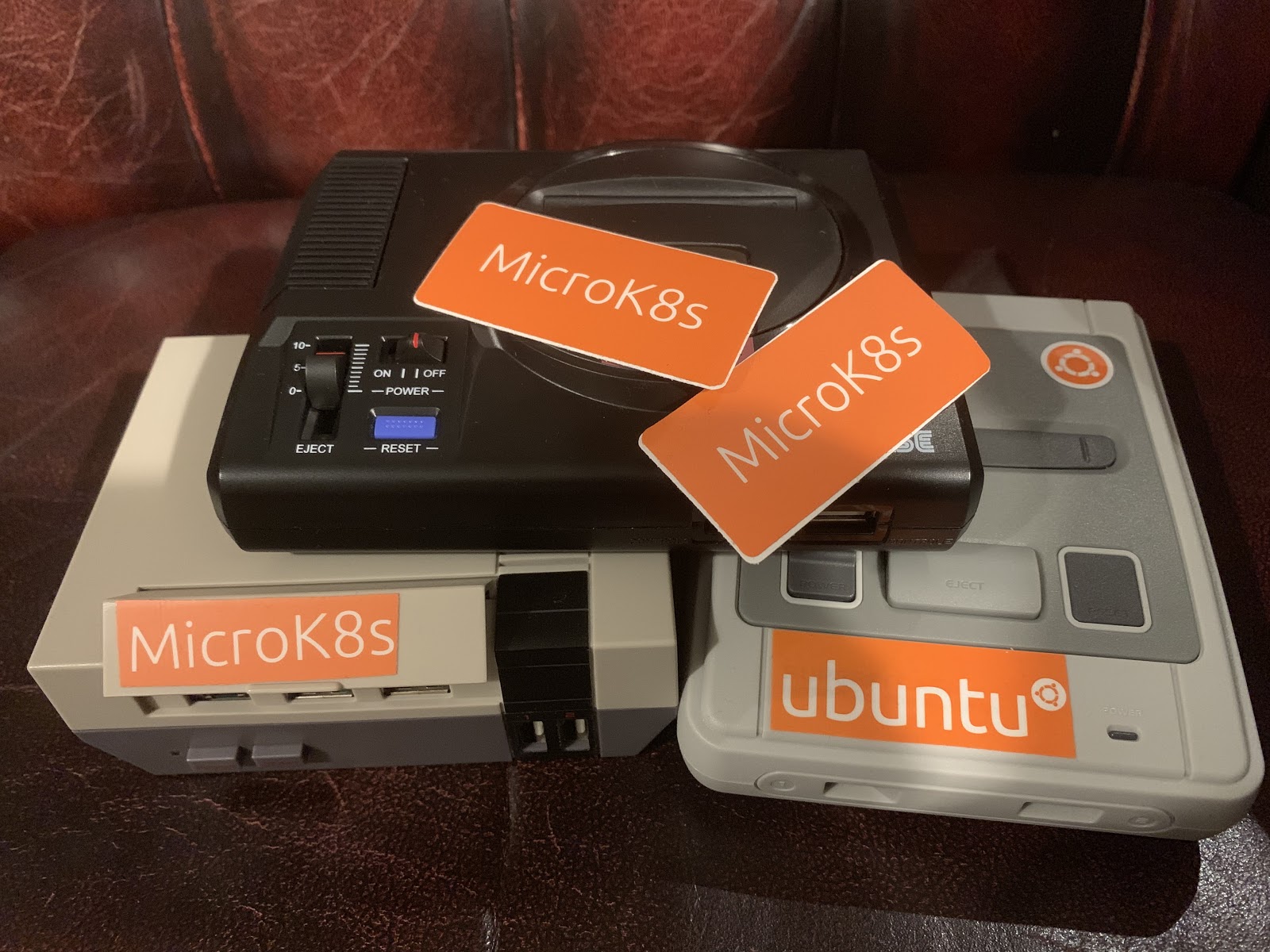
Introduction The goal of this blog post is to explain how to setup and run Ubuntu Server on a Raspberry Pi with MicroK8s on-top to provide a single-node Kubernetes host for development and testing. In the last few months Ubuntu Server 18.04 has been ported to run the Raspberry Pi 2/3 which means we can
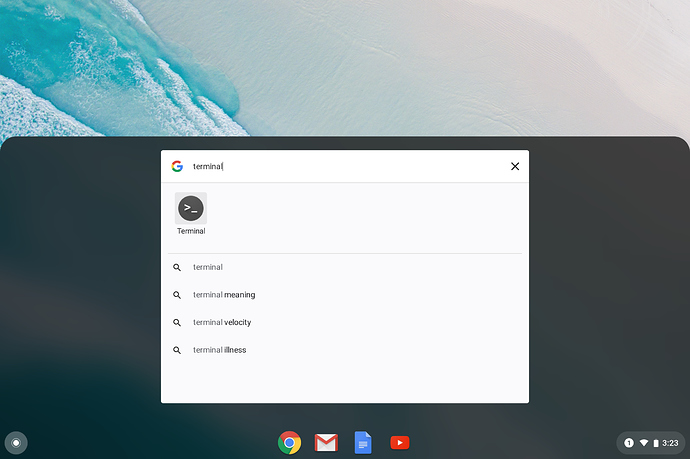
Introduction On supported Chromebook, starting with Chrome OS 69, a new feature called Linux Apps was introduced. This allows Chrome OS users, on supported to install normal Linux applications from the Debian repository and have them integrate with the underlying Chrome OS desktop. The feature has evolved quite a bit since its introductio

Canonical has received Common Criteria EAL2 certification. The evaluation covers a fresh install of Ubuntu 16.04.4 LTS on one of the supported platforms listed in the certification report. Common Criteria (CC) for Information Technology Security Evaluation is an international standard (ISO/IEC IS 15408) for Computer security certification

Security remains the number one concern when designing and deploying IoT devices. High profile breaches continue to occur and concerns cease to subside. For any organisation, security needs to be front of mind and considered from the start – not as an afterthought. Having no mechanism in which to address security concerns can be as
Ubuntu tech blog
Deep dives for developers
Visit the Ubuntu Tech Blog for deep dives into product features, step-by-step tutorials, and the latest updates from Canonical's engineering teams.